August 12, 2026
The Wireless Way — Podcast Transcript
CEO & Owner, Metro Wireless | Managing Principal, Hoffman Capital
Tyler Hoffman is CEO and owner of Metro Wireless, a Detroit-based wireless provider serving thousands of sites nationwide. He runs the company under Hoffman Capital, his self-funded investment firm — no outside investors — which has completed four acquisitions since 2022, most recently Volli Communications.
Before Hoffman Capital, Tyler worked in brand management at FCA Fiat Chrysler Automobiles, in Strategy & Operations at Deloitte Consulting, and as Director of Operations at an independent pharmacy.
He holds an MBA from Northwestern's Kellogg School of Management and a BBA from the University of Michigan's Ross School of Business.Outside the office, Tyler skis around 80 days a year (Utah is his favorite) and picked up pickleball during the pandemic. He's a self-described Detroit "Carhartt guy," guided by a simple rule: play long-term games with long-term people.
Wireless & IoT Program Leader, Intelisys | Host, The Wireless Way
Chris Whitaker is a 25+ year telecom channel veteran and host of The Wireless Way, a podcast on the technologies reshaping how businesses connect. Now in its fifth year, the show reaches listeners in over 100 countries.
Chris currently serves as Wireless & IoT Program Leader at Intelisys, the nation's leading technology services distributor, helping sales partners bring wireless and IoT solutions to end customers. He previously served as GM/VP of Mobility at Spectrotel and, before that, spent years as VP of Advanced Solutions – Mobility and IoT at Telarus, where he built out the wireless and IoT practice.
Across the channel he's better known by his other name: "Wireless Whit," host of the YouTube channel of the same name.An award-winning channel thought leader, Chris is known for turning complex wireless and IoT topics into practical guidance for technology advisors, IT leaders, and channel partners — and for closing every episode the same way: "Identify the way. Map the way. Lead the way."
Chris Whitaker: Welcome to the Wireless Way, where wired meets wireless, and connectivity becomes strategy. I'm your host, Chris Whitaker, and each episode explores the technologies changing how businesses connect, communicate, and compete — from mobility, IoT, and AI to cloud, cybersecurity, networking, and the intelligent edge. We talk with the leaders shaping what's next. If you're a technology advisor, IT leader, channel partner, or innovation builder, you're in the right place. So plug in, tune in, and join us as we identify the way, map the way, and lead the way. This is the Wireless Way. Let's get started.
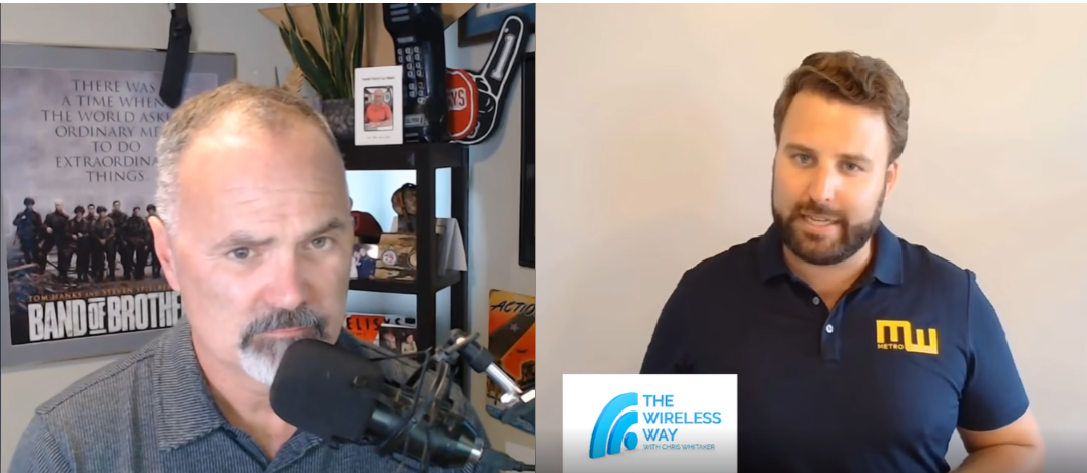
Welcome to another episode of the Wireless Way. I'm your host, Chris Whitaker, and as always, so grateful you're here. I know there's a lot going on in our lives, so I'm glad you're here with us today — you're in for a treat. Hey, this is the Wireless Way, and today I have Tyler Hoffman with me of Metro Wireless, right? So, I mean, right in line with the topic we always love to talk about. Tyler, you know, goes by a few names around Detroit — the Broadband Baron, the Prince of Ping, the Lord of Latency. I mean, this is just getting better and better, but the job is simpler than the title suggests. He buys good businesses and runs them well indefinitely.
Tyler owns and operates Metro Wireless, as I mentioned, a managed service provider that goes to market through the channel, serving thousands of sites nationwide, built by people who genuinely like designing, integrating, and running wireless connectivity —managed Starlink, LTE, 5G internet access, fixed wireless, DIA, DAS, and private LTE and 5G. I mean, that's where it's all going. Wireless is not going anywhere, folks.
Metro Wireless is one of four companies under Hoffman Capital, the independent investment firm Tyler founded in Detroit. There's no fund, no LPs. The capital is his. The operating is his, and his name is on every loan. Since 2022, Hoffman Capital has made four acquisitions, and all four are still standing.
Here's the fun part. Here's the interesting part, folks. Before any of that, Tyler got fired from every job he had after college: Deloitte Consulting, an independent pharmacy, and a boutique consultancy. Looking back, he figures the universe was being polite about telling him what he was actually supposed to be doing. If we could all have that sixth sense. He holds an MBA from Northwestern's Kellogg School of Management and a BBA from the University of Michigan's Ross School of Business. Ladies and gentlemen, I give you Tyler Hoffman, man. Thanks for being here today.
I know that's only a portion of the bio, so we'll fill in the gaps. But man, thanks for being flexible and joining me today.
Tyler Hoffman: Of course. I've been a listener for years, so it's fun to be on the other side of the table, or the microphone, as they say. And yeah, I like to get real, so I don't hold any punches as far as telling, you know, my background and my story.
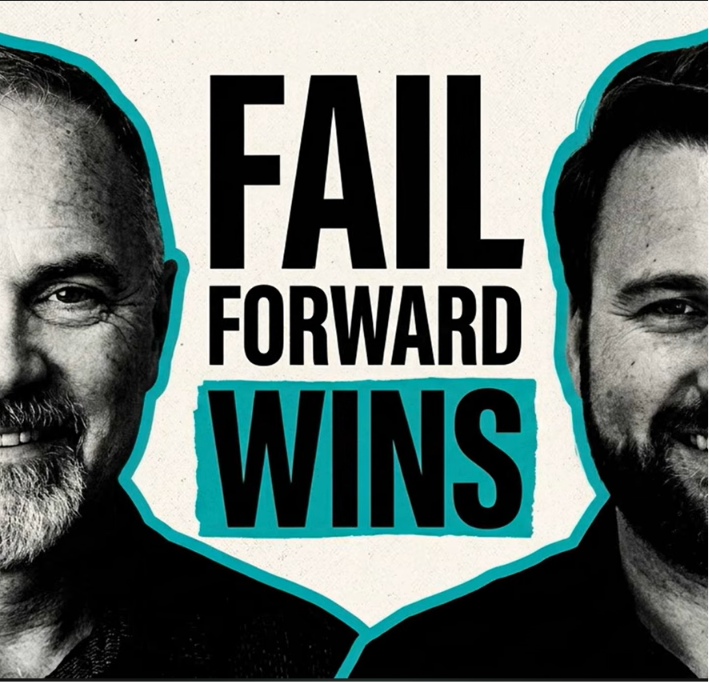
Chris Whitaker: That's so true. I mean, you know, as I read that, yeah, I'm thinking, you know — I think John Maxwell's book called Failing Forward — you know, there's a lot to be learned from our failures, and sometimes we think our failures are something to be ashamed of or embarrassed by. But man, if you take that opportunity and learn from them, holy cow! I mean, that's where success is born. As always, my first question again: like, I know there's more to you than that. What else can you share with us about your journey? What's not the bio?
Tyler Hoffman: Well, I can say that I'm one of the few people that still plays pickleball. It's a hobby that I picked up during COVID, just like everyone else did. I did give up the sourdough baking habit, but pickleball is still something that has stuck with me, and I'm rather stubborn about that. But outside of that, my team knows I'm an avid skier. I skied about 82 days last year, last season, and pickle ball in the summer. So that's typically what I do outside the day job, of course.
Chris Whitaker: Do you have a favorite slope? You know — like, your favorite place you're allowed to go ski?
Tyler Hoffman: I think Utah has the best skiing in the U.S. for a few reasons. Number one, Salt Lake City is within a half hour of most of the six or nine mountains out there. Denver, obviously, is a lot further away — you have to drive at least an hour and a half to two hours. So Salt Lake is a great area to ski out of. Great mountains. I'm starting to get into backcountry, which is where you skin up or climb up the mountain and ski down, which is, you know, really painful, but it's rewarding once you get to the top. And so, yeah, I just generally like getting outdoors and getting out from the office. So that's what I like to doon my off time.
Chris Whitaker: Yeah, that's great. Well, you know, we were talking pre-show about work-life balance, or as I prefer, work-life harmony. You know, you can have a life and still give it all at work and be successful. So it's good. Like, it seems like you kind of got that figured out. Would you — is that fair to say you figured it out, or are you still working on it?
Tyler Hoffman: Well, it's funny. Yeah, you call it work-life harmony, I call it work-life integration, but it's the same thing, right? Whether you're relying on cellular signal —which of course we'll get into — to answer a Slack or an email from the chairlift or whatever it may be. But, you know, going back to your other comment there, Chris — yes, in business school, when I was getting my MBA, we call getting let go and getting hired again a fail forward, or a failing upward, type thing. And luckily, things have been, you know, mostly smooth sailing at Metro Wireless for me. But adversity is something that's not foreign to me, so I've had to learn some things the hard way. But my parents would always say that I was the kid that had to touch the iron to know that it was hot. So here we are today.
Chris Whitaker: Yeah —show me. Yeah, the Show Me State. So, kind of moving on, you know, jumping into the conversation. You know, from your vantage point — you know, for businesses acquiring strategic companies — what is your take on the state of the industry, and I'll even say state of the channel? And, you know, part two of that to share with us is, you know, what are you seeing that we need to know about, you know, to have future success with you, especially working with you directly? What are your thoughts there?
Tyler Hoffman: Yeah, you know, it's an interesting time that we're having this conversation. Just earlier this week, we had our annual company offsite, where we get the entire team across all states and our international team as well into one room to have a conversation about, hey, what are we seeing? What's going on with the business? Both, you know, sales, ops, etc. What are our competitors doing? What are our peers in the industry doing?
And one recurring theme that we're seeing — and I luckily can say this, you know, I have a little bit off in perspective. You know, I've been doing this for four and a half years, and we have thousands of opportunities that we've logged into our CRM, and, you know, meetings with sales partners and what have you. But if I could distill it down to one sentence, what I am seeing is that, you know, wireless connectivity is kind of having a segmentation. I call it the barbell, or the bifurcation. On one side, the bottom side — the bottom side — we're seeing a lot of commoditization. Things are getting cheaper, margins are getting compressed. There's a lot of competition in the space. Carriers are getting more aggressive in that segment. But on the other side, the top's getting harder. You're seeing a lot more — and we'll get into this with the bonded connectivity — bonding multiple connection types together. Private cellular networks are obviously an enterprise-grade solution. Distributed antenna systems— those are all very high-quality, middle- to enterprise-grade solutions, versus SMB, and that's really where I think a lot of smart companies are moving toward, rather than trying to fight it out for the last dollar in the race to the bottom.
What I'm — the conversation that I'm having with TAs is that, look, if you want to be the smart guy in the room in three years, you really should start paying attention to what's going on at the top. You know, bonded wireless solutions, again, private cellular networks, managed Starlink versus just the unmanaged variants. Starting to have that conversation with their end users about what that looks like to them — what is the cost for downtime? Obviously, that's a common conversation that we're having in wireless. That's where you want to be — not in this race to the bottom, where everyone has a 5G failover and we're all competing to that last dollar. That's probably not where you want to be as a TA, and frankly, as a wireless provider, that's, you know, not where we want to kind of stick it out.
I think some conversations I'm having with my competitors and my peers are, you know — you're seeing some folks right now get into different areas. One common one that everyone knows about is moving into digital signage, so that's kind of a new product area that they're getting into and seeing success with. Another one is kind of focusing again on that top part of the market, just like we are on the enterprise side, versus the low-end commoditized market. And then another one's focusing on wholesale, right? So we're all kind of taking a different lane to have success, but the market is simply not what it was five years ago. And just selling a cheap router with an embedded SIM card is just not going to get it done like it used to.
Chris Whitaker: Interesting. So you guys, you know, now Metro Wireless's expanded offerings, and you know, doing so much more than just a SIM card and a gateway, you know, from Starlink and SD-WAN and the UCaaS. I mean, in the last — I don't know, let's just say that's this calendar year — you know, what's moving the needle? Which is it —is it one particular technology leading the way, or is it — are you happy with the distribution of the revenue? Or, again, for a TA, what should they really be focusing on if they're not?
Tyler Hoffman: Yeah, of course. What's actually moving the needle for us? Let's take Starlink as an example, right? TAs are lucky that they have a number of providers that are an authorized partner with Starlink. We are an authorized solution partner of Starlink, so we have a direct relationship with them. We have great access to their engineering team. We get special access to all the distribution for the hardware.
However, any provider can drop-ship a Starlink dish and say, "Good luck installing it, Mr.Customer." Making it enterprise-grade is a different sport entirely. And so, one kind of tagline that we've been using at Metro Wireless for the last couple of years is engineered wireless solutions. And so, again, we're not just the provider that's going to drop-ship you a Starlink kit and say good luck installing this. Typically, we're managing all these installations ourselves, by our W-2 installation team. We'll fly them around the country. But that's just the start, right? Some unique things that we do on the Starlink side is that we can provide static IPs.
Right now, I'm working with a credit union, and this is actually a really good example of a deal. Just this week, we worked with a partner for their credit union, and they want to make sure that they never go down, which is obviously a common use case for wireless. And, you know, in the financial services, is a big end market for us. In that case, we're bonding six connections together simultaneously. We're bonding four 5G modems with two enterprise Starlink dishes, and so that client wants to achieve 600 megabits per second downloads and 100 megabits per second uploads, and so they're willing to pay — I think the MRC in this case is$3,000. That's a lot more than a $60, you know, pizza-shop or quick-serve-restaurant failover, right, Chris?
And so for us, that's a really cool solution where we can bond multiple circuits, run them active, active, active, have great carrier diversity, right? Because you have the Starlink network, and then we'll bond multiple, you know, cellular connections — AT&T, Verizon, T-Mobile — and so when you put all those connections together, and you can call it blending, bonding, how we're aggregating — whatever term you want to use — we will achieve 600 megabits per second download for that client. So a lot of people think that wireless failover can only be 30 to 80 meg downloads. That's just not the case anymore. A lot of these enterprise-grade companies want to make sure that they get a proper solution.
The other side of that is the Static IPs, right? So a lot of our clients require a static IP. Not a lot of other folks can do that in this space, so we can provide a /31, a /30, a /29.Some clients want a /28. That's fine with us, and so we can deliver that. And those static IPs will persist even if Starlink goes down and the 5G is up. Those static IPs always stay the same, and it's part of our special sauce and where we're really seeing success in the channel.
Chris Whitaker: Yeah, that makes a lot of sense. You know, thinking about what's happening and the networking in the WAN space. You know, how AI is impacting that. I mean, companies are needing more throughput. There's more traffic. Are you seeing anything — is anything changing your world because of AI, whether it be internally or how your customers are needing more connectivity? What's your thoughts on AI?
Tyler Hoffman: We will —we'll fully acknowledge, I would not call ourselves a late adopter, but we're not on the bleeding edge either. I think the conversation that we're having internally, as well as with our peers, is how do we help streamline the delivery of our execution, our process — whether it's with scheduling installs smarter, or looking at carrier data and understanding the cellular data usage and SIMs and all the allocations there. That's where we're starting to get really smart and savvy with it, from an internal perspective.
One thing that we're super cautious about, though, is — given that we're kind of branding ourselves as the white-glove, premium solution provider in the space — we want to make sure that the clients have a very frictionless experience, and so we want to be leading with our relationships up front and not relying on too much AI to kind of — I don't want to say cheapen the solution, or cheapen the delivery and the positioning. And so, there are a lot of what I would call back-office and middle-office things that we're deploying AI for. But on the front-office side, our relationships with the channel and our end-user clients, you know, we'll probably be very cautious there.
One example I think of that is on the NOC call center, right? I know a lot of companies right now are deploying these AI agents to answer the calls. For us, that just won't do, right? When someone calls our phone number, we watch our average hold times very closely, and we average less than 30 seconds to get a live technician on the phone, who's a NOC tech. They're trained on all of our systems, all of our hardware, all of our deployments, and that can actually help you. So, again, AI has its place, but we want to be very diligent about how we're deploying it.
Chris Whitaker: Excellent. Yeah, I mean, it's every conversation, and I think you're right. The industry is still trying to best figure out how to leverage it safely, securely, without losing that human interaction, because man, that's what's at risk. You're right. No one — it's so frustrating when you have a problem. You call an 800 number. You spend the first five minutes playing with the phone tree. "Or, I'm sorry, I didn't get that. Can you—" I'm like, what? Yeah, give me a person! So I'm glad you're leaning into that, and I think that is definitely the right answer.
You know, we talked a little bit earlier about, you know, being channel-driven — the channel industry ecosystem, you know, is such a vast group of professionals, right? It covers all types of verticals, and there's all these different profiles. Some partners, you know, generalists. Some of them do healthcare. Some of them will do, you know, finance or retail. Where are you seeing success — is there certain verticals? Or what does the ideal partner look like for you, and, you know, the ones in your top five partners — do they have any common traits that you can share with us that we could learn from?
Tyler Hoffman: Yeah, we're, of course, seeing — I kind of look at our company, and there's two sides to it. There's the recurring book, the service kind of managed offerings that we do, like the managed Starlink, 4G, 5G, those types. We still have a fixed wireless DIA network in Detroit, which is kind of how we started and got our chops in wireless about 15 years ago.
The other side of that is the project side. So we have a very robust process for all of our project-type work. When I say project, Chris, I mean managed Wi-Fi, DAS, which stands for distributed antenna systems, or cellular boosters, as we say globally, and then private cellular networks. So those are all examples of projects that we do.
Projects — now, when we do a project, we have a three-phase approach called plan, build, manage, and so our partners know that they can come to us to run a really robust process for their clients. And let's say we're doing a DAS install, right — a DAS system to boost some cellular indoors. We just did a big job, about 700,000 square feet, last year in a Virginia senior-living facility. We went on-site to do a proper site survey. Our construction manager, who is a W-2 employee for us — he wears the Metro Wireless polo or T-shirt — he comes onto the site with his signal reader. He has, like, it looks like a portable television from the '90s, with the, you know, rabbit-ear antennas, and he's taking cellular signal readings all across the site with the breadcrumb meter, and then he'll use that — he'll use iBwave or Ekahau, which are the industry-grade wireless coverage planning tools.
And so from there, we'll go ahead and build a proper design, which will then spit out a bill of materials. Then we can estimate labor and materials and install time for that job, and that's kind of the planning phase. The building phase, of course, is when we go to integrate that solution — shipping materials to the site, using our guys to run the structured cabling, testing it, doing a post-install site survey and audit, ensuring that we got good coverage. Again, whether it's Wi-Fi, DAS, or private cellular networks, we're deploying this three-phase approach each step of the way.
The final stage is: after we integrate something, we're not just going to run away from the client and say, "Here — here are the keys, good luck." We manage it, right? And so we're with that client for the life of the system. Again, whether it's a Wi-Fi deployment, a DAS deployment, or a PCN deployment, we'll manage and co-manage it with that client or their client's MSP team. We're happy to, you know, co-manage with them as well, to make sure that there's, you know, no downtime. We're planning firmware upgrades, replacing or repairing any broken hardware along the way. Again, the systems that we deploy, we typically plan to keep alive for five to seven years at least, and so we don't want to just run away after we install it. We kind of co-manage it with the client and their MSP team, and so that approach — plan, build, manage — has been really successful in the channel, and is something that we're really excited about. Of course, alongside all the managed Starlink and fun stuff that we do, too. So, yeah.
Chris Whitaker: I love it. Well, the plan part is something I'm so glad that's your first step, because all too often it's so tempting for, you know, whether you're a technology architect or even a supplier, to take the order. They ask for this, give them that, and build them, not realizing, sometimes, the customer is not really sure what the options are. They're not asking for the right solution, right? So planning allows you to kind of learn more about — hey, why do you need this? You know, how are we going to use this? Is this a 24/7 operation? You know, there's a lot of questions that, in order to plan properly, you need to gather a lot of information. And I talk about that a lot across the ecosystem, when I'm out in the field, you know, helping our TAs. You know, how do you get more your fair share? And just taking the order for the connectivity — often you're leaving a lot of money on the table.
Kind of takes me to my next question about your recent acquisition. I mean, as much as I love wireless connectivity, those other tech stacks that customers and partners need and users want — tell us a little about that. Has it been a few months now? I've kind of lost track of time. Has it been what, two months, three months?
Tyler Hoffman: It's been 57 days, but who's counting, right? So yes — but, just, we — and you mentioned this in my bio — but, you know, I look to grow organically, but also inorganically, or via acquisition, and so that is correct. So we closed on Volli Communications. They're based out of Columbus, Ohio, two months ago. They're big into UCaaS, big into SIP, and they also bring the Intelisys relationship to us, which we're very excited about, because there are a number of partners who, you know, love Intelisys, love working with you guys, and so we're so excited to kind of bring them into the fold under the Intelisys umbrella. So that's been a huge add for us, but it also adds durability plus depth. So there are a number of engineers that we brought on in the sales team as well that bring a lot of expertise that, frankly, we just didn't have yet at Metro Wireless, and so adding that scale has been super helpful.
Again, I want to be careful. We're not going to get to the point like we're one of the — some large aggregator, or large cable company, where you're going to call an 800 number, wait on hold. You'll never just be a ticket number to us, right? But we are starting to add scale and get really excited about what's happening there. Again, adding more capability under one roof, one phone number to call, stronger channel relationships. That's all we're about. And so the Volli acquisition was a great fit for us. And again, we're 57 days into it, but we've already had really good reception with the channel. Just yesterday, we held a webinar talking about how we've joined forces together, and how we're stronger as one than we were as two. I think we had, like, 75 sign-ups, over 50 people attend, and so people are really excited about the story there.
Chris Whitaker: You're right — those acquisitions and whatnot, I mean, they take time, you know, to kind of bake in. You got systems, and, you know, so 57 days in, that's pretty good that you're already promoting it and, you know, seeing some traction. I'm excited about it. I think that's fantastic, you know, because we're always trying to get that convergent message out. You know, it's like, we know that most partners sell — I don't know how we come up with this, like, one and a half products per, you know, per client, knowing there's at least ten things you can sell. So, you know, having more of that one-stop shop, solid local support, planning, you know, proper planning that and supporting that — that's fantastic, you know.
So for a TA, when you're looking at options — you know, there's, depending on which TSD you look at, 300 to 400 suppliers, you know — so that's a lot. It's a lot of static out there. And of course, in your space, you know, it's like you could either go direct to a national carrier, go through a company like yourself, or one of the other aggregators. What do you want partners to know when they're trying to decide? Should I go with a Metro Wireless, or should I just go straight to a national carrier? How do you see that as a different decision to be made?
Tyler Hoffman: Yeah, when I — you know, what I typically tell a TA, and what our team typically mentions in these conversations, is that, look, Chris, a carrier will sell you their network, but what we look to sell you is the right network for the job, even when it's three of them bonded together, right? Like this credit union we're working with, bonding in AT&T, Verizon, T-Mobile. I like to tell people that they can keep their carrier, but get rid of the headache behind it, because we're managing it for them.
But the TA that really wins with us — and the one that's, you know, we're seeing a lot of success as far as kind of a persona or archetype, if you will — is the TAs who bring us the deals that their carriers say no to, right? They're looking for one who says, you know, if the carrier is saying this is too complicated, or we can't manage this, or we can't deploy on this timeline — bring us those deals, because those are the ones where we roll up our sleeves and say, let's engineer a wireless solution that works for you.
So, anything where downtime equals real dollars, right? I already mentioned quick-serve restaurants — that's a very common one. Financial institutions that really value 100% uptime, construction, as well as oil and gas and the energy sector, are very popular end-user spaces for us to play in with wireless. Those are the situations where we're deploying these multi-circuit bonded solutions — whether it's 5G plus 5G, plus Starlink dishes together, things of that kind of nature. That's where we're seeing the most success.
Someone who candidly is probably not the right TA for us is someone that's just price-focused, right? I want to come out and say that, look, we're never going to lose a deal on price, but we're also not going to lead with price either. And so, again, we try to provide this frictionless, value-added, premium experience for our clients, and deliver more value than we charge for it. And so sometimes that means we can't be the price leader. But again, we're happy to get competitive on pricing, and of course, making sure the TAs are made whole as well. So that's what we're really proud of.
Chris Whitaker: A saying I love to use, and I think the more I say it, the more it feels true: you know, pay now or pay later, but you're going to pay, right? And, you know, you have a choice. You could pay smartly, or you could pay not smartly. I don't know if "stupidly" is the right word, but you're going to pay. I mean, so you might as well do it right the first time. But it's more expensive to clean up a mess than it is to just do it right the first time. So I always encourage, you know, our partners to be bold in having the conversation. You know, it's like, hey, if price is the only driver here, don't be surprised if you get what you pay for. You know, quality is not inexpensive. It costs money to have quality, and have systems and the right people to plan it and execute. Right.
Tyler Hoffman: Well, I'll tell you about a deal where that came to life, right. So two years ago, there was a partner calling us. It was a very anxious, nervous partner, with an anxious end-user client, of course, and so they brought to us a situation. This was in the energy sector as well. This was an oil and gas substation, or midstream station. They needed to stand up seven sites with Starlink during Thanksgiving week, all with /29 static IP blocks for each site. So we were able to — because again, we're a stocking provider of Starlink, you don't have to wait six weeks to get a dish from us — as well as the installations, we have all our install guys in-house with us. We went to every single site the week of Thanksgiving. We deployed seven of these with a bonded Starlink solution, again, deployed via /29. We're also a gold Peplink provider, and so we love partnering with Peplink. We think they have some of the best wireless routers in the space. We have very few, if any, fail for us, and they have this special sauce, the SpeedFusion technology, which helps us bond multiple connections together and deliver those static IP blocks via our own ARIN allocation. Those are the types of TAs and the deals we work with.
Because you're right, a carrier direct would not promise that turnaround time, just because — especially, the fiber was not going to get installed quick enough — is a common story we hear in wireless, right? And so, when fiber would have taken months to install, we were able to get seven Starlink sites deployed all within a few days of each other, again, delivered with those Peplink routers and the /29 static IP blocks. So, those are the types of applications and use cases that we look for, and our team is hungry for. And so that's typically where we're finding the most success these days.
Chris Whitaker: Yeah. So let me make sure I heard you right there. I kind of want to summarize what I think I heard you say there. So there was a time, not that many years ago, where, you know, a 4G wireless connection was okay — it was good to know for a small SMB that's on a cable circuit. You know, because people always say, well, yeah, you can't really run an office, you know, with, you know, 10, 20, 30 employees, or somebody that requires symmetrical speeds. You can't run that on 4G. But I'm seeing companies actually cutting the cord altogether, putting in dual 5G circuits with SD-WAN, and, you know, they're getting the throughput they would expect from a fiber connection. I mean, is that what you're seeing? Is that what you're saying — that, you know, hey, there was a time maybe wireless wasn't the right answer, but it can be the right answer now, for more use cases, from a, you know, more of a bigger-bandwidth need.
Tyler Hoffman: That's exactly right, Chris. Again, it's impossible for me to know just from looking at the data, but there are many, many, many cases where we're not just running as a redundant connection. We're often running as an active-active connection with the fiber circuit, just because, especially with these bonded solutions — again, this credit union deal, we're going to deliver 600 megabits per second download. That's a circuit that they're going to use active-active with their primary fiber connection. That's super cool.
The other thing that is really interesting, and I don't think people are paying enough attention to this, so this is probably good to bring up, is that when 5G came out, yes, people got excited. The headline was the faster speeds. But what we're noticing in-house is that latency is often half, or less than half, of 4G. And so we keep hearing stories of clients using our 5G connections to run their hosted voice seats, right? They're doing video conferencing on them, to Microsoft Teams, Zoom, Google Meet, what have you. They're running their hosted UCaaS over the connection and using it as a primary circuit. There was a case study done recently for a quick-service restaurant chain. They're using a dual-modem 5G Peplink router, running it as their primary and only circuit, because they're opening up so many of these franchises so quickly across the U.S. They don't want to deal with the wait for a wireline install, and so they're using this as their primary permanent connection — again, the wireless dual-modem 5G unit. So it really has moved to become, I call it, the coax killer, so to speak. So there's a lot of cool stuff happening with it, and the speed and the reliability will only get better.
Chris Whitaker: I agree with you. We haven't seen the best is yet to come. I was talking to an NVIDIA engineer recently, and, you know, they're already — they're already building the standards for 6G. You know, 10-millisecond latency, triple-digit throughput, symmetrical. I mean, it's, you know, it's just going to get more and more exciting.
Speaking of the future, you know, looking at the next few years for Metro Wireless and for, you know, Hoffman Capital, I mean, what's on the radar? What can you share with us? You know, what does winning look like for Metro Wireless the next three to five years?
Tyler Hoffman: Yeah, for us, what winning looks like — and again, it's a very timely conversation now that we just had our annual company offsite earlier this week — but we look to grow aggressively. We are going to grow both organically and via acquisition. It's a skill set and playbook that we have down at this point, now that I've done four acquisitions. So if you see me at the conference, you know, talking about the M&A side, that's probably why as well. I think the number we need to hit, if I recall from the planning session this week, was 26% annual growth. Again, that's a mix of organic growth, but also by acquisition. Our goal is to be a $50 million revenue company by 2035. We're already a year and a half into that plan, and we're actually ahead of pace, which is great. I, you know — fingers crossed, knocking on wood — that continues, of course. But we're excited, right? You know, for me, I'm going to keep going, and Hoffman Capital is how I do that. I'm not a private equity company. I have no investors. It's just me, myself, and the bank, and the loans I have, and we're very excited to grow it. I want to play this game for long term.
Chris Whitaker: Man, you know — I think you mentioned that twice, and not to get in the weeds too much, but so it sounds like you're — I don't know if the right word is "anti–private equity funding." I mean, what's your take on that? Why are you so adamant about just being your own?
Tyler Hoffman: Yeah, and I think the best way I can describe this is, you know, we're constantly recruiting people. We're trying to make sure we have the A players and the A team that we want to drive and have success in the channel and with our users on. And a common question that we get is, well, Tyler, how are you funded, or how do I see you doing these acquisitions? What's going on? Are you private-equity-backed? And the look of relief on their faces when I say, no, look, we're not — we're not private-equity-backed. There's no outside investors. I don't have to go flip this company in five to seven years. That is so relieving to so many people — both clients, partners, vendors, you know, whoever we speak to — is because I think private equity deservedly sometimes gets a bad rap for buying companies, doing some quick cost cuts, then reselling it on the market. We are the antithesis of private equity, right? I want to buy these companies, grow them sustainably, and run them for the long term. And very fortunately, and almost surprisingly, it's become a very powerful recruiting tool for landing great talent. So that is what we are about. That's what we've been about for the last four and a half years. That's what I will be about for the next 20, and we hope to have long-term success result from that.
Chris Whitaker: I have to agree with you there. I can see why people will be relieved. And, you know, private equity — they serve their role where needed. I mean, that, I'm sure, works out great in a lot of cases, but guess what? It doesn't always work out for individuals, or customers, or commissions being cut. I mean, there's some challenges there. And, yeah, no, that's — that's great, that's fantastic.
So now, as we wrap up here, is there anything else we haven't covered you want to talk about, or any last words you want to share with us?
Tyler Hoffman: Well, going off of our last thread, there's one line or motto that I try to live my life by, and again, this is not — I didn't come up with this. I got this from someone who's smarter than me. But I try to play long-term games with long-term people. I apply that to the companies I buy and the sellers that I work with and the owners. I apply that to the employees that I get to work with each and every day. And I certainly play that game with my partners, right? I want to work with partners who are going to be around for the next 10, 20, 30 years. Everything else is just noise.
Chris Whitaker: That's right. Focus on what matters. Everything else is just noise, man. And there's a lot of it out there, right? I mean, what are some examples of the noise that you have — that you have to really work hard to ignore? I mean, we talked — there's a lot of chaos, a lot of chatter going out there. Anything come to mind that we should avoid?
Tyler Hoffman: Well, let's see — how much time do you have? But the thing that I think about is there are so many different solutions getting offered in the channel these days, right? Not just in the channel, but at large in the marketplace. And it's easy to have shiny object syndrome. You want to have the latest and greatest. Maybe we're talking about AI, right? I've not seen AI deployed in the wireless space in a way that gets us really excited to offer it, beyond just, you know, looking shiny. Doing acquisitions can sometimes be a shiny object, if you're not buying the right company with the right solution at the right price. There is a lot of shiny objects, and it takes a lot of discipline to be able to say we're not going to offer this solution, we're not going to go do this acquisition. There are a lot of things that we have to stay very disciplined about. And I think, you know — look, at the end of the day, we're a Midwestern company who sells a solution set nationally, but we still have those Midwestern values. And being from Detroit and Motor City, we're gritty, right? We work hard, we get up, we put our Carhartts on — and I'm looking at my Carhartt jacket right next to me — and we just get the damn thing done, and that's where we're going to continue to do.
Chris Whitaker: Love it, man. Stay focused and do the right thing. It's something my dad always told me that I've carried through my whole life, is, you know, staying focused. And that can be a challenge, because you got to ask yourself, what should I focus on? And doing the right thing sounds great, but if you're not really sure what the right thing is, you know, that could get challenged.
Well, Tyler, man, thanks for your flexibility. I'm glad we had this conversation. You're always welcome back. We can, maybe, if you could continue to grow like you are, love to hear more and get an update down the road. So thanks for your time today.
Tyler Hoffman: Thank you for having me, Chris. Again, I started listening to this over four years ago, when I did not have a qualified opinion. And again, my comments are only worth the price that you pay for them, but nonetheless, it's so exciting to be here again and share some stories from the field, as we see it. And yeah, I look forward to, you know, perhaps coming back in a few years, once we continue the trajectory we're on.
Chris Whitaker: Man, we don't have to wait a few years. And again, I appreciate it greatly, you being a listener for so long, and that is great, to kind of see the full circle. And we're going — in five years, over 100 countries, nearly 2,000 cities. It's kind of crazy — this little side project called the Wireless Way is kind of taking a life. I love sharing stories like yours, man. You really are making an impact — you know, for not only the industry, but, you know, selling partners. But it's an inspiring story, man. So great job! Congratulations on your success and the growth. I'm happy for you, and all your employees and your customers. So great job, my friend!
Tyler Hoffman: Awesome. Thank you, Chris, so much for having me on.
Chris Whitaker: You're so welcome. And there you go, folks. Another episode of the Wireless Way. As always, if this made you think of a client, or a colleague, or a situation, a customer problem you're working with, please share this episode. You can go to WirelessWay.net, and there's a Contact Us button if you have any feedback or any suggestions for an upcoming episode. Love to hear from you. And as always, thanks for checking out this episode. And I'll see you next time on the Wireless Way.
Fantastic.
We spend a lot of time talking about technology, innovation, and the future of our industry. We chase goals, deadlines, and the next big opportunity. But none of that matters if we don't take care of the person behind the career. Mental health is just as important as physical health. It's okay to slow down, unplug, ask for help, or simply check in on someone you care about. Sometimes a simple conversation can make all the difference. If you're struggling, know that you're not alone. Reach out to a friend, a family member, a colleague, or a mental health professional. And if someone comes to you, take the time to listen. You may never know how much that moment matters.
Till next time — keep learning, keep leading, keep connecting. And, as always: identify the way, map the way, lead the way. Take care of your network. Take care of your business. And, most importantly, take care of yourself.


